
- The Beginner Course Landscape
- The Number Almost Nobody Puts in the Thumbnail
- Warnings vs. Course Sales: The Same Niche, Both Sides
- What Indonesian Beginners Are Watching
- Common Mistakes Beginners Make Starting Out
- How to Start Trading Forex: 4 Practical Steps
- Is Learning Forex Worth It? Weighing It Honestly
- Conclusion: Learn the Mechanics, Respect the Base Rate
Search “forex trading for beginners” or the near-identical “forex for beginners,” and YouTube hands you a full course in under half an hour, a promise that you can start immediately, and, if you keep scrolling, a video from the same niche telling you not to start until you’ve watched it first. All of it is technically accurate. None of it mentions one number regulated CFD providers in Europe and the UK must publish: the share of their retail accounts that lose money.
The Beginner Course Landscape
The most common format for “how to forex trade” content is the compressed full course: “Forex Trading For Beginners (Full Course in under 26 Minutes)” (Trade with Pat, YouTube) and “How To Start Forex Trading For Complete Beginners In 2026” (Vidollar, YouTube) both promise to take you from zero to trading in one sitting. It’s an efficient format for search traffic, since “forex trading basics” is a finite list of concepts (pips, lots, leverage, spread), but compressing months of screen-time practice into 26 minutes tends to flatten out how long it takes to trade those concepts competently under pressure.
The “from scratch” subgenre, “How to Start Trading Forex From Scratch” (Jason Graystone, YouTube) and “HOW TO START FOREX TRADING IMMEDIATELY” (Ken’s MoneyMatters, YouTube), leans harder on urgency. “Immediately” is a strange promise for a skill that can take months or years to apply competently, while regulators’ own data shows that most retail CFD accounts still lose money.
The Number Almost Nobody Puts in the Thumbnail
In 2018, the European Securities and Markets Authority (ESMA) introduced rules requiring CFD providers serving retail clients to display standardized risk warnings, including the provider-specific percentage of accounts that lose money. Similar requirements were later maintained through national rules, including the FCA regime in the UK. ESMA’s original analysis found that between 74% and 89% of retail investor accounts typically lost money trading CFDs, a category that includes many leveraged retail forex products.
Individual disclosures sit in a broadly similar range, with figures published in 2026 including 68% at CMC Markets UK and approximately 68–69% across current IG disclosures. A private aggregation of FCA-mandated warnings produced a mean of 69.9% across 14 UK CFD brokers in April 2026 (ESMA CFD disclosure requirement; The Investors Centre CFD Loss Index, 2026). Although the percentages vary by provider and reporting period, the figures consistently show that a majority of retail CFD accounts lose money. That points to a broader product and trading-risk problem, although platform costs, execution, client mix, and trading behavior can still affect the result.
Warnings vs. Course Sales: The Same Niche, Both Sides
This cluster contains its own built-in tension. “How to Trade Forex – Don’t start until you watch this!” (James The Trader Strategies, YouTube) and “The DARK TRUTH About FOREX Trading They DON’T Tell Beginners” (Learn Forex with Dapo Willis, YouTube) both open with a warning hook.
The second is notable because the same creator, Dapo Willis, also sells a paid course, discussed in “Dapo Willis Forex Mastery Course Review” (Peter Okakpu, YouTube). None of that makes the warning wrong, but it’s worth noticing that “here’s the dark truth” and “here’s my course” frequently come from the same channel.
What Indonesian Beginners Are Watching
“Belajar Trading Forex Dari 0 Ep 16,” part of a long-running structured series on smart money concepts (ThisIsDaryl, YouTube), shows a different content shape entirely: not a single 26-minute course but an ongoing episodic series, where episode 16 alone implies at least 15 prior lessons. For anyone trying to learn forex properly rather than “immediately,” that structure is arguably more honest about the time commitment than a single compressed upload.
Common Mistakes Beginners Make Starting Out
- Treating a single course as complete preparation: the concepts in forex trading basics (pips, leverage, spread, and margin) are simple to list and slow to apply correctly under real conditions.
- Skipping a demo account: many regulated platforms offer one, and the loss-rate data above shows why simulated practice can be useful before real capital is on the line. A demo cannot fully reproduce live execution or the pressure of risking money, but it does expose basic mechanical mistakes.
- Over-leveraging early: leverage is one of the biggest factors separating a survivable losing streak from an account-ending one, and it’s among the first things beginner content tends to gloss over in favor of “how much can you make.”
- Ignoring the base rate: loss disclosures commonly show that a clear majority of retail CFD accounts lose money. That doesn’t mean trading is unlearnable, but it does mean the honest starting assumption should be “this takes real work,” not “this is easy if you follow these five steps.”
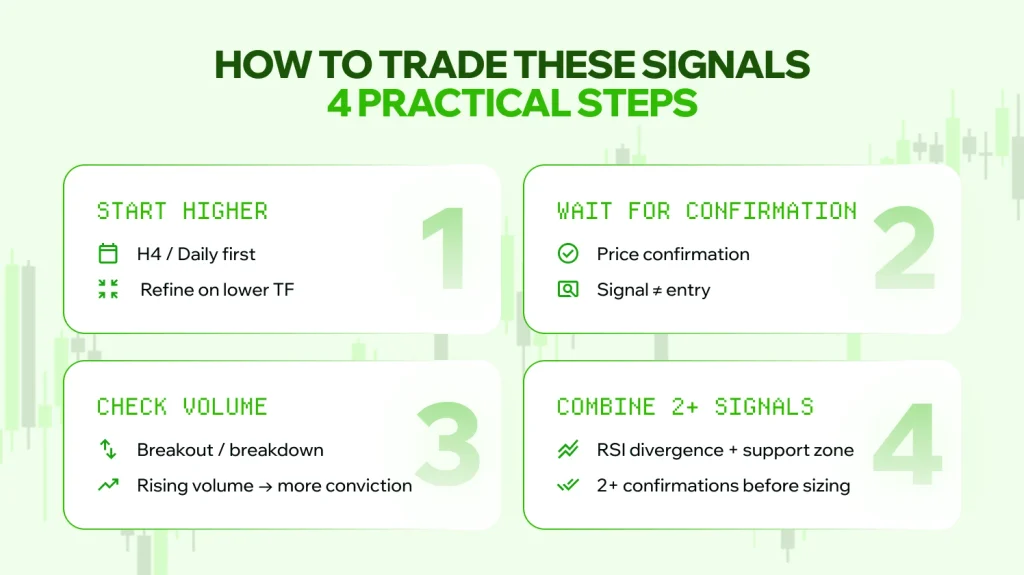
How to Start Trading Forex: 4 Practical Steps
- Step 1: Learn the mechanics on a demo account first. Pips, spread, margin, and order types should be second nature before any real money is involved.
- Step 2: Pick one currency pair and one timeframe to start. Breadth is tempting; depth is what builds pattern recognition.
- Step 3: Write your risk rule before your first live trade, not after your first loss. A fixed percentage per trade, often framed in educational material as 1–2% or less, can limit the damage from a losing streak, although the appropriate level depends on the strategy and total portfolio exposure.
- Step 4: Track every trade in a journal. It’s one of the clearest ways to find out if you’re improving, instead of relying on how the last few trades felt.
Is Learning Forex Worth It? Weighing It Honestly
The Advantages: Major forex markets are generally liquid, open nearly 24 hours a day from Sunday to Friday, and accessible with relatively small starting capital through many regulated brokers. The educational content, whatever its flaws, does lower the barrier to understanding the mechanics compared to a decade ago.
The Limitations: The regulator-mandated numbers are what they are: most retail CFD accounts lose money, and the gap between “I understand how forex works” and “I am consistently profitable” is much larger than a 26-minute course can close. Content that skips this number isn’t necessarily dishonest, but it is incomplete.
CEO & Co-Founder, Versus Trade – Vitalii Bulynin
(paraphrased from FXStreet interview, July 15, 2026)
Conclusion: Learn the Mechanics, Respect the Base Rate
Nothing about how to trade forex is secret, and nothing about it is immediate. You can learn forex mechanics from free content: how to trade in forex pairs, what moves price, how leverage cuts both ways. The videos cited above are a reasonable starting point.
What most of that content leaves out is the number regulated CFD providers must disclose: a clear majority of their retail accounts still lose money. Start on a demo, size your risk before you need to, and treat the first year as a learning period, not an income source.
CFDs are complex instruments and come with a high risk of losing money due to leverage. This content is educational and should not be treated as financial advice.
Enter the market accessibly. Start a Standard Account from just $10 and take it from there.

- The Beginner Course Landscape
- The Number Almost Nobody Puts in the Thumbnail
- Warnings vs. Course Sales: The Same Niche, Both Sides
- What Indonesian Beginners Are Watching
- Common Mistakes Beginners Make Starting Out
- How to Start Trading Forex: 4 Practical Steps
- Is Learning Forex Worth It? Weighing It Honestly
- Conclusion: Learn the Mechanics, Respect the Base Rate